
In 1997, the world avoided an apocalyptic scenario when Mr. Freeze (Arnold Schwarzenegger), in his fiendish plot to start a new ice age, was thwarted by George Clooney, a.k.a. Batman, in the movie Batman & Robin. But when Arnie thought he could “kick some ice,” frankly, he was pretty misguided. In fact, plenty of species would have thrived under this new frozen landscape and, likely many Yukoners, would celebrate the year-long ski season!
Each winter, our furry neighbours don an extra-thick coat of fur and fat to make it through the winter. But a coat isn’t the only strategy for making it through the winter. Wood frogs have no hair or fat stores at all, yet they manage to survive the winter. In the winter, a wood frog’s heart stops beating, their blood no longer flows and two-thirds of the water in their body freezes, yet they somehow survive. If you have ever encountered one of these motionless amphibians, you would assume they are frozen solid, but that isn’t the case.
As winter temperatures decline, ice begins to form within the abdomen of the frog and encases their internal organs. From the outside, you can see their skin begin to freeze and their eyes turn white with ice. But what you can’t see is that their livers are rapidly producing large amounts of glucose that flush into every cell in their bodies. This glucose forms a natural antifreeze that prevents cells from freezing and prevents water molecules from leaving the cell and preventing dehydration. The frog’s body allows ice to form around the outside of cells and around organs—but not inside the cells, thus preventing lethal damages of ice formation. But there is unknown magic to this process … like, when a frog thaws out, how does their heart start pumping again? Excitingly, if we can adapt this process medically, it may allow us to freeze organs destined for transplant.
There is another surprising Yukon creature that lets itself freeze through winter: the arctic wooly bear caterpillar. This baby moth has been found to survive temperatures as low as -70℃. Strangely, an arctic wooly bear spends most of its life frozen rather than thawed. Like wood frogs, wooly bears rely on natural antifreeze compounds in their bodies, including glycerol, to keep ice crystals from forming in their body. Perhaps concerningly, it isn’t these harsh conditions that threaten wooly bears, rather it is parasites that can survive in the same frozen conditions. In spring, these caterpillars need to act fast, having to feed, form a cocoon, emerge as a moth, breed, lay eggs and get ready to freeze again.
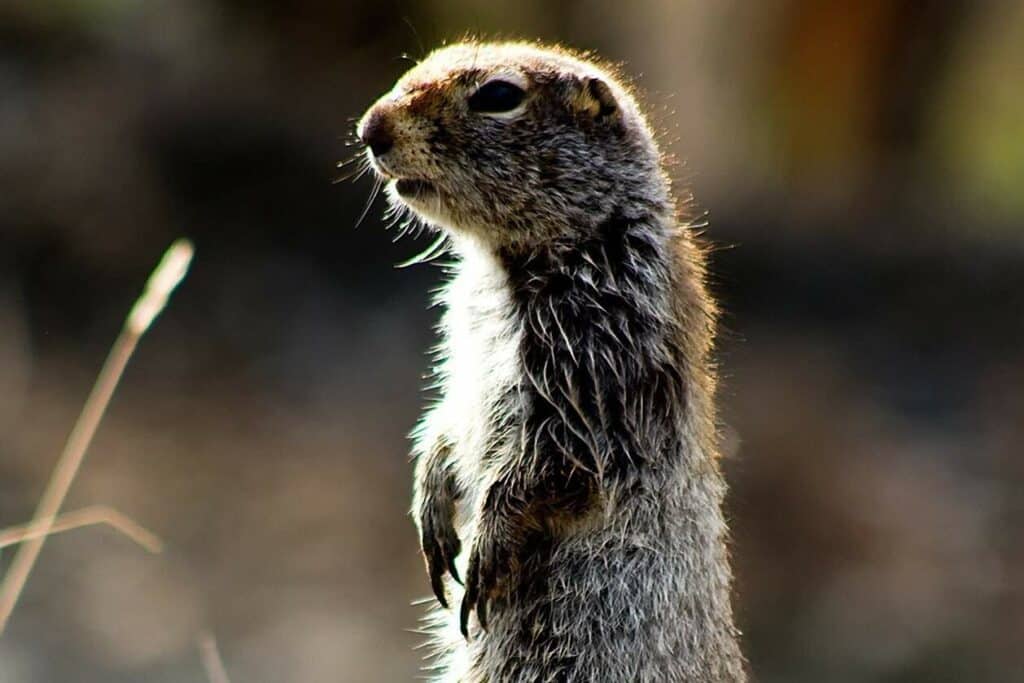
One of the most remarkable cold-weather species is one we may take for granted, the Arctic ground squirrel. All over the Yukon, we see these rodents every day, but rarely are they appreciated (check out the population near Jake’s Corner to see some rare individuals with pure-black coats). In fact, the Arctic ground squirrel holds the record for the lowest body temperature of any mammal on Earth, recorded at -2.9℃. For warm-blooded species, a significant change in body temperature is extremely dangerous (think about how a small fever feels), but in this extreme example, their body temperatures will plunge a total of 34℃.
Arctic ground squirrels are extreme hibernators: as their heart and lungs slow down, so do the electrical signals in their brains. In fact, electrical signals and neurons in the brain begin to vanish over the winter; yet, come spring, the squirrels emerge from their burrows completely healthy. Researchers believe it is this unique decline in neurons that may hold a key to their cold-weather survival. There is very little known about how they survive, but there are clues emerging about specialized proteins in their brains that protect key functions while allowing unnecessary connections to wither away. Researchers at Leipzig University think that by understanding these proteins (called tau), it may help us understand degenerative neurological diseases, such as Alzheimer’s, where faulty proteins damage the brain.
These three creatures represent only the tip of the iceberg when it comes to remarkable winter survival strategies. So next time there is an icy villain threatening humanity, maybe relying on a bat (or an actor) shouldn’t be our best approach, but rather we should hope for a more-appropriate hero … like … The Mighty Ground Squirrel!


